

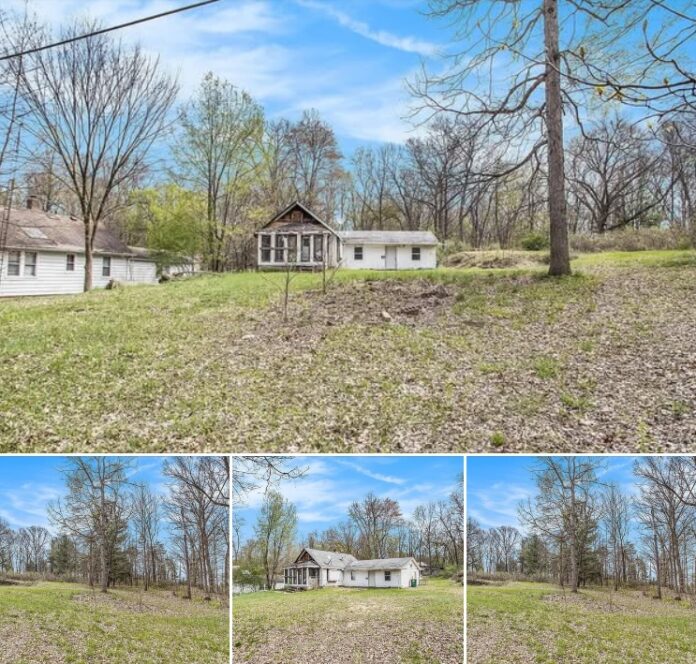
For buyers who enjoy transforming neglected properties into something special, a fixer-upper situated on 1.6 acres offers an interesting opportunity. Featuring a two-unit structure, mature trees, and generous outdoor space, this property was originally advertised as an investor and handyman special with several possible renovation and redevelopment options.
Unlike a traditional move-in-ready residence, this property requires substantial improvements. However, its unusual layout and sizable lot may appeal to experienced investors, contractors, and buyers who are comfortable undertaking a major restoration project.
One of the most distinctive features is the existing two-unit arrangement. Rather than containing only one conventional residential space, the structure offers two separate areas that could potentially serve different purposes after renovation.
For buyers interested in rental investments, the two-unit configuration may provide an opportunity to investigate creating separate residential accommodations. If local zoning, building codes, and licensing requirements allow, the property could potentially support two rental units.
This arrangement might appeal to investors seeking multiple income opportunities within a single property. However, the financial feasibility would depend on renovation costs, local rental demand, operating expenses, and the condition of the existing structure.
Another possibility mentioned in the original listing involves converting one unit into a spacious two-car garage.
For homeowners who need covered parking, additional vehicle storage, or a dedicated space for equipment, this could be a practical option.
A garage conversion would require careful evaluation of the building’s structure, access, foundation, and applicable construction regulations. Nevertheless, the idea illustrates the flexibility that makes the property interesting.
Buyers who enjoy hands-on projects might also consider creating a workshop.
A dedicated workspace could be useful for woodworking, vehicle maintenance, equipment repairs, or other hobbies that require more room than a typical residential garage.
The original description also suggests the possibility of converting one section into guest accommodations. Depending on permitted uses and the necessary improvements, this could provide additional space for visiting family members or friends.
Beyond the building itself, the 1.6-acre lot represents one of the property’s most appealing features.
With more than an acre and a half of land, the property offers outdoor space that could accommodate a variety of landscaping and recreational ideas.
Mature trees contribute to the setting, creating a natural atmosphere that may appeal to buyers who prefer established greenery over a completely cleared lot.
The existing vegetation could also provide shade and help establish an attractive landscape around a renovated residence.
For gardening enthusiasts, the acreage may offer room to explore vegetable gardens, flower beds, and other outdoor projects.
A future owner might also consider creating a patio, outdoor seating area, or recreational space, depending on the layout of the land and local requirements.
The original advertisement highlights the possibility of future expansion. While the lot’s size may provide physical room for additional improvements, buyers should verify setbacks, zoning restrictions, utility capacity, and building permits before assuming new structures can be added.
Another important consideration is the property’s current condition.
The residence is being offered as-is, meaning the seller is not promising to complete repairs before a sale.
According to the original description, substantial work is required. This makes the property more suitable for buyers who understand renovation planning, construction expenses, and the challenges associated with older or neglected buildings.
Before purchasing, a thorough inspection would be essential.
Prospective buyers should investigate the foundation, roof, exterior walls, plumbing, electrical systems, heating and cooling equipment, and any evidence of water intrusion or structural deterioration.
For a two-unit structure, it would also be important to confirm whether both units are legally recognized and whether they meet applicable residential occupancy requirements.
A property may physically contain two living areas without necessarily being approved for use as two independent rental residences.
This distinction can have a major impact on renovation plans and investment expectations.
The original listing also notes that personal property remains on the premises.
This means buyers should determine what items will be included in the sale and whether any unwanted belongings, debris, or equipment must be removed after closing.
Cleanup expenses can add to the overall renovation budget, particularly when a property has been vacant or used for storage.
For investors evaluating the opportunity, understanding the after-repair value is another important step.
After-repair value, commonly called ARV, refers to the estimated market value of a property after planned renovations have been completed.
The original advertisement promotes the property’s potential ARV, but it does not provide verified comparable sales, a detailed repair estimate, or a projected resale value.
Therefore, any expectation of profit should be supported by independent market research rather than advertising language alone.
A realistic financial assessment would include the purchase price, renovation materials, contractor labor, permits, inspections, insurance, taxes, carrying costs, and a contingency reserve for unexpected repairs.
For someone considering a rental strategy, the evaluation should also account for maintenance, vacancies, property management, and ongoing operating expenses.
The location was described as desirable in the original advertisement, although the published article does not identify a verified street address, city, or state.
Without that information, it is not possible to independently evaluate neighborhood conditions, school districts, nearby amenities, or local property values.
Prospective buyers would need to obtain the exact address and research the surrounding market before making a purchasing decision.
Despite these uncertainties, the property offers several features that distinguish it from a typical small fixer-upper.
The combination of 1.6 acres, an existing two-unit structure, mature trees, and possible garage or workshop conversions creates a variety of potential uses.
For one buyer, the goal might be to renovate both units for residential use. Another might prefer converting the property into a single residence with additional storage and workspace.
Someone interested in a long-term investment could investigate whether the layout supports a financially practical rental arrangement.
Each approach would require different levels of investment, planning, and regulatory approval.
The property is best viewed as a renovation opportunity rather than a finished residence or guaranteed investment.
Its appeal lies in the chance to evaluate an existing structure, explore different configurations, and potentially create a more functional property through careful improvements.
For experienced buyers who are prepared to manage substantial repairs, this 1.6-acre fixer-upper could provide an interesting foundation for a future project.
With its flexible two-unit layout, established trees, and room for outdoor improvements, the property illustrates how an older residence can offer possibilities beyond its current condition.
Whether transformed into a renovated home, a workshop-centered residence, or a legally approved rental property, the ultimate outcome would depend on the buyer’s vision, budget, and ability to complete the necessary work.
For anyone who appreciates a challenging restoration project and the freedom that comes with owning a larger parcel of land, this property presents an opportunity worth investigating.

From Zillow
