

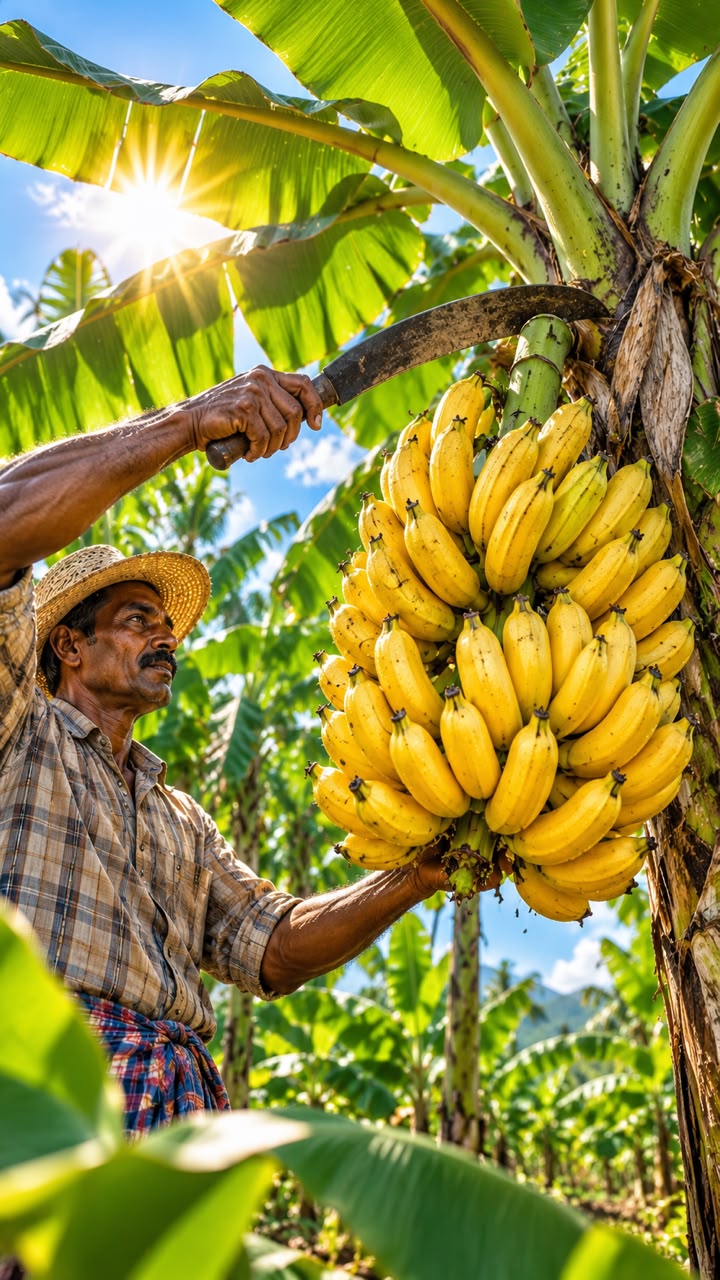
Growing bananas is a fascinating journey that shows how nature transforms a small beginning into a beautiful and rewarding harvest. From preparing the soil and planting a young banana plant to watching its leaves grow, its flower emerge, and its fruit gradually develop, every stage reveals something amazing about the natural world.
1. Preparing the Soil and Planting the Banana Plant
The growing process begins with choosing a suitable location and preparing healthy, nutrient-rich soil. Banana plants thrive in warm climates where they receive plenty of sunlight, consistent moisture, and protection from strong winds. Good drainage is important because the roots need water to grow, but they should not remain in waterlogged soil.
Farmers often begin with healthy suckers that grow from the base of an existing banana plant or with young plants produced through propagation. Once planted, the young banana plant starts establishing its roots and adapting to its new environment. Regular watering and proper soil care help it develop a strong foundation for future growth.
2. Watching the First Green Leaves Appear
As the banana plant becomes established, new leaves begin to emerge from the center of the plant. At first, the leaves may appear small and tightly rolled, but they gradually unfold into large, broad green leaves that capture sunlight.
These leaves are essential because they help the plant produce the energy it needs to grow. With enough warmth, water, nutrients, and sunlight, the banana plant can develop rapidly. Over time, its stem-like structure becomes stronger, and the plant begins to look more like the familiar tropical banana plant seen in farms and gardens.
3. The Banana Plant Continues to Grow
As the weeks and months pass, the banana plant produces more leaves and develops a larger, stronger structure. Although it may look like a tree, a banana plant is actually a giant herb. Its apparent trunk is formed from tightly packed leaf bases rather than the woody trunk found on most trees.
During this stage, consistent care can make a significant difference. Adequate moisture, suitable nutrients, and enough space allow the plant to grow healthy leaves and prepare for flowering. Warm temperatures generally support faster growth, while cold conditions can slow development or damage the plant.
4. The Amazing Flowering Stage
One of the most exciting moments in the banana-growing process is the appearance of the flower. A large flower stalk emerges from the center of the plant and gradually develops a distinctive hanging structure with purple or reddish bracts.
As the flower develops, rows of tiny individual flowers begin forming the future bananas. This stage marks an important transition from vegetative growth to fruit production. The appearance of the flower is a reminder of how much development has taken place beneath the surface and throughout the plant.
5. Small Green Bananas Begin to Form
After flowering, the tiny developing fruits become more noticeable. These young bananas usually grow in groups called hands, which together form a larger bunch. At first, the fruits are small, firm, and green, but they gradually increase in size as they develop.
The plant continues directing energy toward the developing bunch. Water, nutrients, sunlight, and suitable growing conditions all contribute to healthy fruit development. Watching the bananas grow from tiny green fingers into a large bunch is one of the most rewarding parts of the process.
6. The Banana Bunch Grows Larger
As the bananas mature, the bunch becomes heavier, and the individual fruits grow longer and fuller. The green bananas remain firm while their internal structure develops. Depending on the variety and climate, the time required for a banana plant to produce a mature bunch can vary considerably.
Farmers monitor the size and shape of the fruit to determine when it is ready for harvest. Commercial bananas are commonly harvested while still green because they can continue ripening after they are picked. Careful handling helps prevent damage to the developing fruit and preserves its quality.
7. Harvesting Fresh Bananas
When the bunch reaches the appropriate stage of maturity, it is carefully cut from the plant. Because banana bunches can become quite heavy, harvesting often requires attention and proper handling to avoid damaging the fruit.
After harvesting, the bananas may be cleaned, sorted, and prepared for storage or transport. In commercial production, they are often kept under controlled conditions so that ripening can be managed before they reach markets and consumers.
For home gardeners, harvesting can be especially satisfying because it represents months of growth, observation, and care. The process also provides a closer connection to where food comes from and how much work can go into producing a simple piece of fruit.
8. From Green Fruit to Ripe Yellow Bananas
Once harvested, bananas gradually ripen under suitable conditions. Their green skin begins to change color, their texture becomes softer, and their flavor develops its familiar sweetness. Ripening involves natural changes in the fruit, including the conversion of stored starches into sugars.
Depending on the variety and harvesting conditions, bananas may take several days or longer to ripen. Some varieties also have different skin colors and flavor characteristics, making the banana family more diverse than many people realize.
Can You Grow Bananas at Home?
Yes, growing bananas at home is possible if you choose a suitable variety and provide the right growing conditions. In warm regions, banana plants can thrive outdoors, while gardeners in cooler climates may grow dwarf varieties in large containers and move them into protected spaces during cold weather.
For the best results, choose a sunny location, use fertile and well-draining soil, water consistently, and provide enough room for the plant to develop. Banana plants also benefit from suitable feeding during active growth. Remember that producing fruit depends on the variety, climate, growing season, and overall care.
Even if your climate is not ideal for harvesting bananas, growing a banana plant can still be an enjoyable way to bring a tropical touch to your garden, patio, or greenhouse.
Nature’s Incredible Growing Process
From the first roots settling into the soil to the appearance of fresh green leaves, the development of a flower, and the formation of a heavy bunch of bananas, the entire journey is a remarkable example of nature at work.
Every stage requires time and suitable conditions. What begins as a small young plant can eventually produce a large bunch of fruit, offering a wonderful reminder of the value of patience and proper care.
Watching the complete growing process unfold from planting to harvest makes it easier to appreciate the work behind the food we enjoy every day.
Would you grow bananas in your own garden? Share your thoughts and tell us whether you would prefer to grow them outdoors, in a greenhouse, or in a container at home.
