

Virginia Home Advertised for Just $1,000 After a $16,500 Sale—But There’s an Important Catch
Imagine scrolling through real estate listings and discovering a two-bedroom home in Virginia advertised for just $1,000.
At first glance, the price sounds almost unbelievable. In a housing market where even modest properties can cost considerably more, the possibility of purchasing an entire house for such a small amount is bound to attract attention.
But the story behind this property is more complicated than the advertised price suggests.
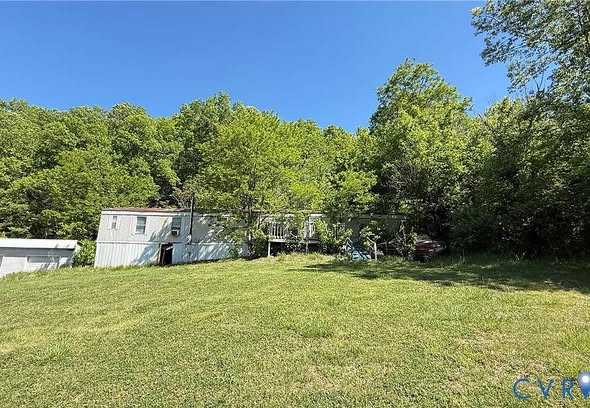
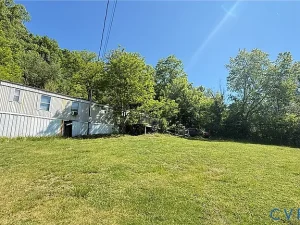
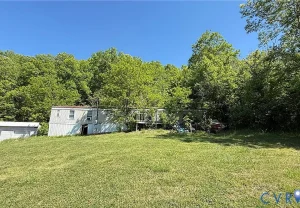
Located at 26 Compton Lane in Buchanan, Virginia, this single-story modular residence sits on approximately 0.21 acres in Botetourt County.
The property has an unusual auction history involving delinquent taxes, a Special Commissioner’s Sale, court approval, and several dramatic changes in its advertised price.
Most importantly, the $1,000 figure was an auction listing amount—not a confirmed final purchase price.
A Small Virginia Home With an Interesting Story
The property is located in Buchanan, a community in the scenic western Virginia countryside.
According to Zillow’s property records, the residence was built in 1995 and contains approximately 1,280 square feet of interior living space.
It is identified as a modular or prefabricated single-family residence.
The recorded layout includes two bedrooms, one full bathroom, and an additional half bathroom.
That differs from the original article’s description of an approximately 860-square-foot home with one bathroom.
For this reason, buyers should verify the home’s actual size and layout rather than relying on a single marketing description.
The house is arranged on one level, with no basement listed in the available records.
For someone interested in a smaller home without stairs, this arrangement could be appealing.
However, the property’s condition remains an important unknown.
A Property Offered Through a Public Auction
Unlike a conventional home sale, this property was marketed through a Special Commissioner’s Sale.
The auction was connected to delinquent real estate taxes in Botetourt County.
Such sales can occur when outstanding tax obligations lead to court-authorized proceedings involving real estate.
The property was among two parcels advertised for an online auction.
According to the auction description, bidding was scheduled to close on July 31, 2026.
The sale was subject to court approval, meaning that a winning bid did not necessarily guarantee immediate ownership.
The auction also included a 10% buyer’s premium added to the high bid.
This is an essential detail because the amount a buyer offers at auction may not represent the full purchase cost.
Why Was the Home Advertised for $1,000?
One of the most eye-catching details is the property’s advertised price.
Zillow’s history shows that the residence was listed for $10,000 in July 2026.
On July 30, the displayed price was reduced to just $1,000.
That represented a 90% reduction in the advertised figure.
However, the auction description specifically warned that the listing price did not reflect the final sale price.
In other words, the $1,000 amount should not be interpreted as proof that someone could purchase the property outright for that sum.
Competitive bidding, the buyer’s premium, court approval, and other auction terms could affect the final transaction.
This distinction is especially important when discussing unusually inexpensive real estate.
The Home Previously Sold for $16,500
The property’s history becomes even more interesting when looking at an earlier transaction.
Zillow records show that the house was advertised for $8,000 in May 2026.
It went under contract in June.
On June 26, 2026, the property was recorded as sold for $16,500.
That sale price was more than twice the earlier advertised amount.
Only days later, the property appeared again with a $10,000 listing price.
The advertised price subsequently fell to $1,000, and the property was marked pending on August 6, 2026.
The available records do not establish the final outcome of that later pending transaction.
This sequence illustrates why auction listings must be interpreted carefully.
A low advertised amount is not necessarily the amount someone ultimately pays.
Two Bedrooms and a Practical Single-Level Layout
According to the more detailed property record, the home includes two bedrooms.
For a smaller household, this arrangement could offer a straightforward living space.
One bedroom might serve as the primary sleeping area, while the second could accommodate guests.
Depending on its condition and configuration, the additional room might also be useful as a home office or hobby space.
The single-level design means the main living areas are arranged without a second story.
This may appeal to buyers who prefer a simpler floor plan.
However, the listing does not provide enough verified interior information to describe the kitchen, flooring, cabinetry, or general finish quality.
Those details would need to be established through photographs, inspections, or an in-person viewing.
One Full Bathroom and an Additional Half Bath
Zillow identifies one full bathroom and one half bathroom.
The full bathroom includes a bathtub, according to the property record.
Having an additional half bathroom could provide convenience for visitors or household members.
However, the condition of both bathrooms is unknown.
Buyers considering an auction property should carefully investigate plumbing, water supply, drainage, and fixtures.
Older modular homes may require repairs or replacement of certain components, depending on their maintenance history.
The presence of bathrooms in the public record does not establish that they are currently functional.
Approximately 0.21 Acres of Land
The residence sits on a parcel measuring approximately 9,278 square feet, or 0.21 acres.
This is a relatively manageable lot size.
For someone who wants outdoor space without maintaining a large rural estate, the parcel could offer a practical balance.
Depending on the condition of the land and applicable regulations, a future owner might consider landscaping, a small garden, or an outdoor seating area.
The original article describes the lot as improved.
However, buyers should confirm property boundaries, access, easements, and any restrictions before planning changes.
A survey can help establish the precise extent of the land.
A Modular Home Built in 1995
The property is classified as a modular or prefabricated residence.
Modular construction involves building portions of a home in a controlled manufacturing environment before assembling them on a permanent site.
The actual design, materials, and foundation can vary significantly between properties.
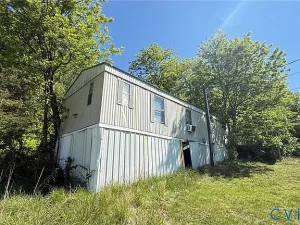
Zillow identifies aluminum siding, metal siding, and block among the building materials.
The roof is described as composition roofing.
Because the home dates to 1995, inspections should evaluate the roof, siding, foundation, and structural condition.
Buyers should also confirm whether the residence meets applicable requirements for financing and insurance.
Not all lenders treat modular, manufactured, and site-built homes identically.
The Importance of Buying As-Is
One of the most significant warnings in the auction description concerns the property’s condition.
The sale was advertised on an as-is, where-is basis.
The listing also stated that the brokerage made no representations about the property’s condition or what might be present or absent.
For buyers, this means caution is essential.
An auction purchase could involve substantial repair expenses.
Potential concerns might include structural problems, roof damage, plumbing issues, electrical defects, moisture intrusion, or missing equipment.
The listing does not establish that any specific problem exists, but it also does not guarantee that the residence is habitable.
A buyer should never assume that an unusually low auction price means the property is an inexpensive move-in-ready home.
Water, Sewer and Utility Questions
The available property record does not clearly establish conventional water and sewer arrangements.
Both services are identified with references requiring additional clarification.
Heating and cooling are also listed without detailed system information.
These uncertainties are especially important.
A buyer would need to determine whether the home has functioning water service, wastewater disposal, electricity, heating, and cooling.
Repairing or replacing essential utility systems can substantially increase the cost of a property.
For a home purchased at auction, understanding these expenses before bidding is critical.
Located in Buchanan, Virginia
Buchanan is situated in Botetourt County in western Virginia.
The community is known for its small-town setting and proximity to the scenic Blue Ridge region.
For people who appreciate quieter surroundings, the area may offer an alternative to larger cities.
The property is located within driving distance of local schools and everyday services.
Zillow identifies Buchanan Elementary School, Central Academy Middle School, and James River High School among nearby schools.
Actual school assignments should be confirmed with the district.
The location may appeal to buyers who prefer a smaller community, although transportation and access to services should be evaluated before purchasing.
Could This Be a Renovation Opportunity?
For an experienced buyer, a low-priced auction property can sometimes represent an opportunity to restore an older residence.
However, the potential depends entirely on the property’s condition and the total acquisition cost.
A renovation might involve repairing the exterior, updating mechanical systems, replacing worn finishes, or improving the interior layout.
But major structural or utility problems could make a project considerably more expensive.
A careful buyer would compare the estimated total investment with the value of comparable finished homes in the area.
The calculation should include the winning bid, buyer’s premium, legal costs, taxes, inspections, repairs, insurance, and contingency funds.
A property that appears inexpensive at auction may not remain inexpensive after all expenses are included.
Understanding the 10% Buyer’s Premium
The auction terms identify a buyer’s premium of 10%.
This means the winning bidder would owe an additional amount based on the high bid.
For example, a winning bid of $10,000 would produce a $1,000 buyer’s premium, bringing that portion of the purchase cost to $11,000.
Other expenses might still apply.
The example is only an illustration of how the premium works, not a statement about the property’s final auction result.
Buyers should read the full auction agreement to understand payment deadlines, required deposits, closing procedures, and additional obligations.
Why Court Approval Matters
Another important feature of the auction was the requirement for court approval.
In a court-supervised sale, the highest bid may be subject to additional review before the transaction can be finalized.
This creates a different process from purchasing a conventional listed property.
Prospective buyers should understand when a bid becomes binding, how confirmation works, and what happens if the sale is not approved.
Legal advice may be appropriate when the auction terms are complicated.
A successful real estate purchase depends not only on offering an attractive price but also on understanding the legal process.
The Property’s Unusual Price History
The recent timeline tells a remarkable story:
- May 7, 2026: Advertised for $8,000.
- June 26, 2026: Recorded sale for $16,500.
- July 6, 2026: Listed again for $10,000.
- July 30, 2026: Advertised price reduced to $1,000.
- August 6, 2026: Listing marked pending.
The dramatic changes make this property particularly interesting.
However, they also demonstrate why asking prices, auction starting figures, pending statuses, and completed sales should never be treated as interchangeable.
Each represents a different stage in the real estate process.
A Reminder That Cheap Real Estate Requires Research
The possibility of owning a home for a very small amount of money can be exciting.
But a low advertised price does not tell the entire story.
The property’s condition, auction requirements, legal status, and repair needs are all important factors.
For someone with renovation experience, access to contractors, and sufficient financial resources, an auction property might deserve investigation.
For a first-time buyer seeking a move-in-ready residence, the risks may be considerably greater.
The right decision depends on careful due diligence rather than the headline price alone.
A Small Virginia Home With a Big Story
At first glance, 26 Compton Lane appears to be a modest two-bedroom home on approximately 0.21 acres.
But its recent history makes it far more unusual.
The property was recorded as sold for $16,500 in June 2026, then appeared in another auction listing with an advertised price that eventually dropped to $1,000.
The later listing was marked pending, but no subsequent completed sale is confirmed in the records reviewed.
For buyers interested in auction real estate, this property illustrates both the potential appeal and the important uncertainties involved.
The real question is not simply how little someone might bid.
It is how much the property would ultimately cost to acquire, repair, and maintain.
Would you consider bidding on a two-bedroom Virginia home advertised for just $1,000, knowing that the final price and repair costs could be much higher?

listed on Zillow
